


In this post, we are going to discover what an open line is and how it is different from a closed line. We will also see different types of open figures.
Before we begin, take a look at this post about straight and curved figures to refresh your memory.
Open Figures
We know that a line is open because its endpoints do not connect.

In this picture, you can see that the line begins at one point and ends at another. Since they do not connect, we know that it is open.
Closed Figures
On the other hand, we can draw closed figures without lifting our pencil off the paper, starting and ending at the same point.
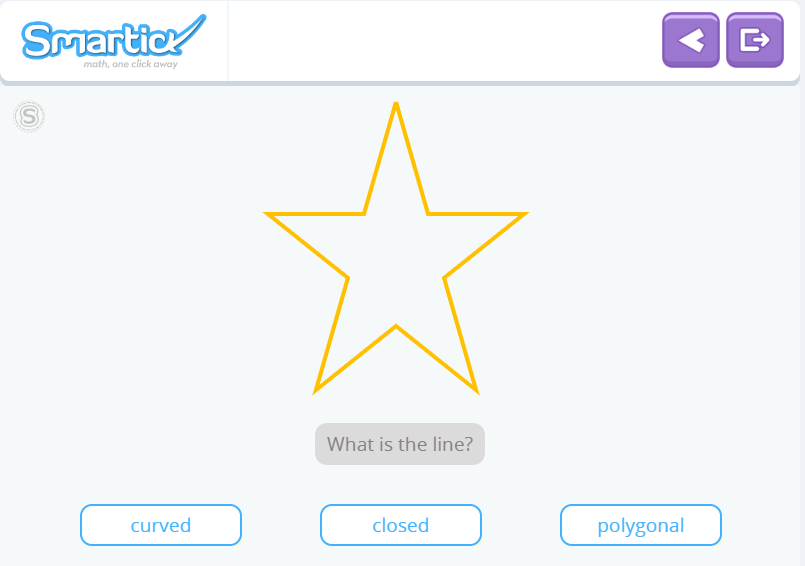
The answer is closed. Try and see if you can draw the shape without lifting your pencil off the page, starting and ending at the same point!
Types of Open Figures
They are classified according to their shapes. Let’s learn about some types of open figures and how to classify them:
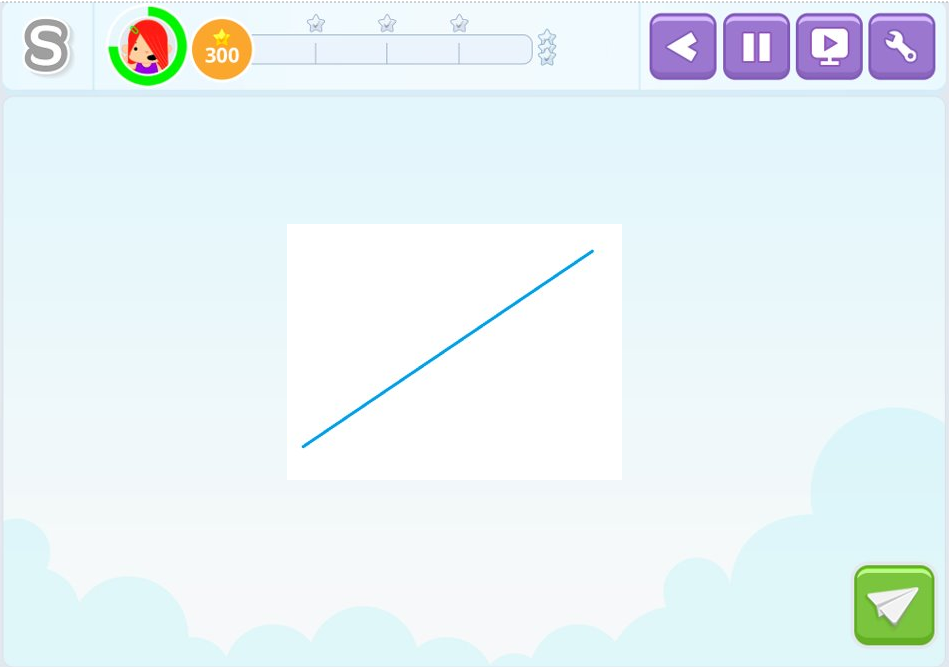
Straight Open Figure
It is a series of points that are lined up one after another, all in the same direction. It is also the shortest path between two points.
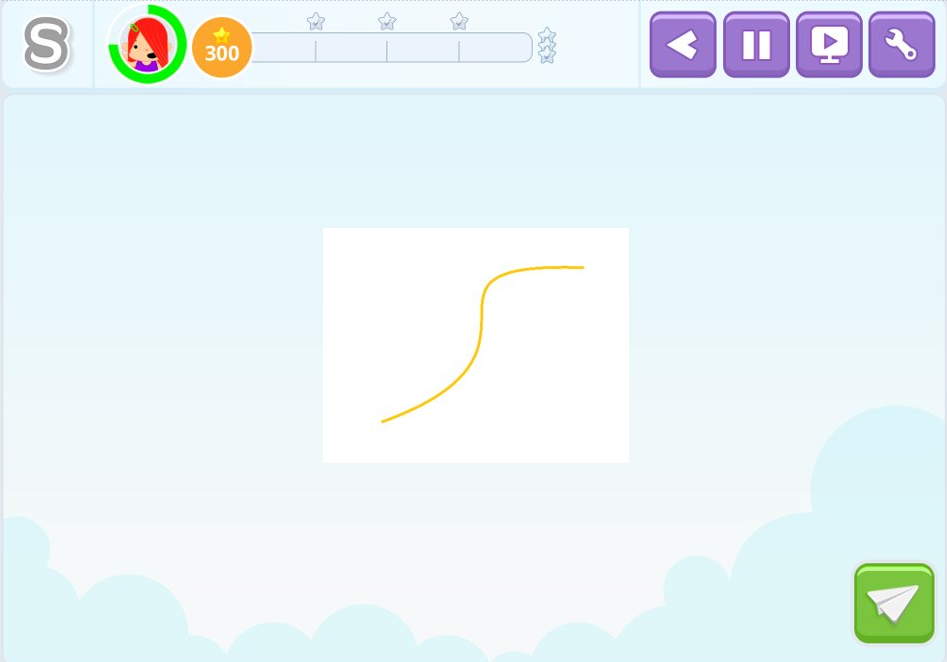
Curved Open Figure
The points on the line are always changing direction.
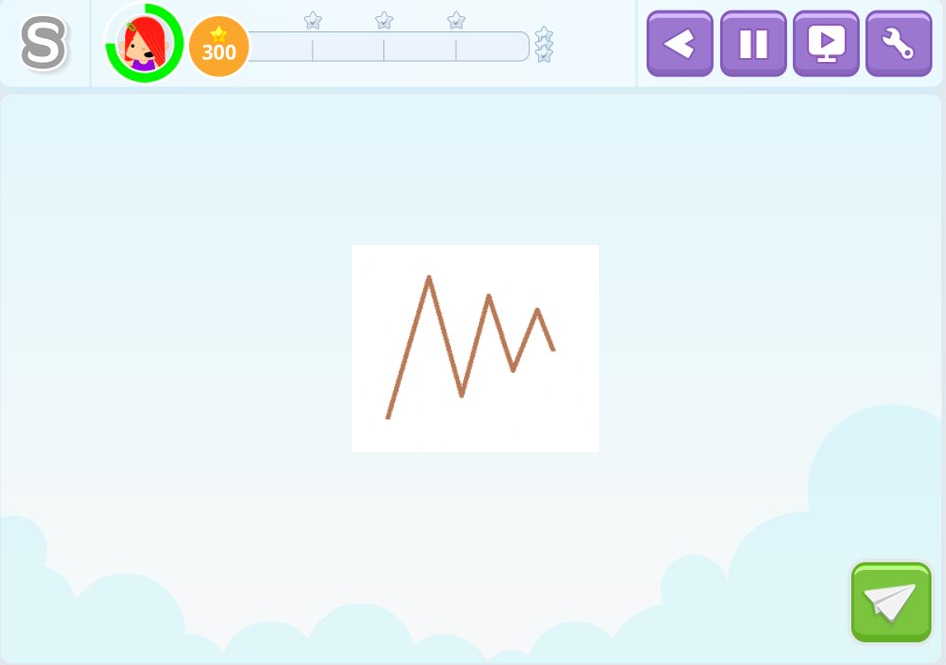
Polygonal Open Figure
It consists of more than one open straight line with points going in different directions. These lines have the following shape:
Mixed Open Figure
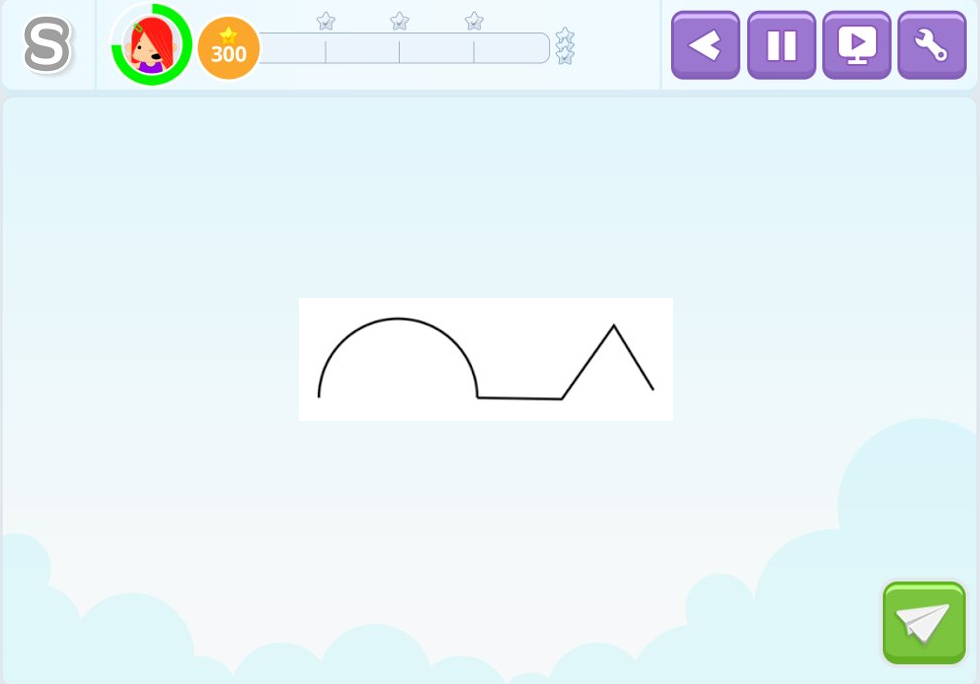
It is a mixture of open curved and open straight figures.
Activity with Open Figures
Now that we know what an open line is, let’s test our knowledge! In this section, we will look at an activity from a Smartick tutorial to check what we’ve just learned.
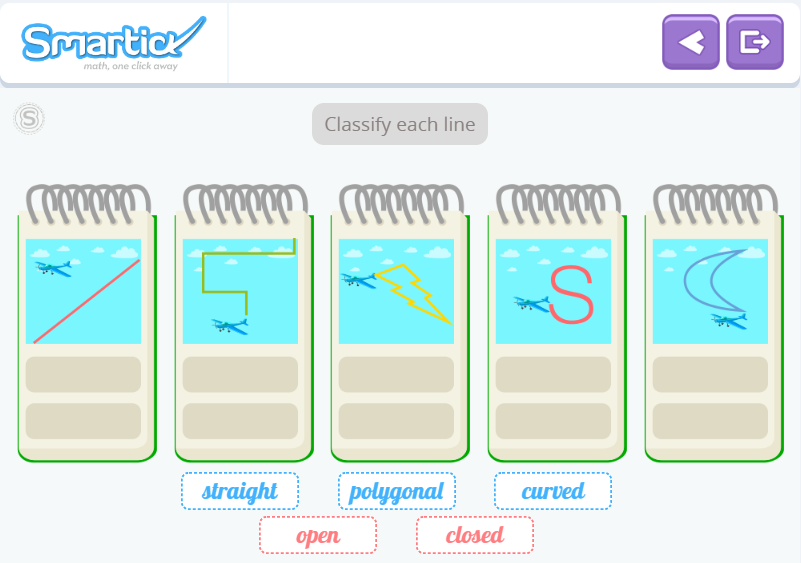
Classify the Following Figures
I hope that you have had fun learning with us. If you would like to keep learning and practicing, log in to Smartick and try our method for free!
Answers:
Image 1: straight open
Image 2: polygonal open
Image 3: polygonal closed
Image 4: curved open
Image 5: curved closed
Learn More:
- How to Identify Open and Closed Polygonal Figures
- Learn about Open and Closed Curves
- Geometric Figures and Straight Lines
- Learn More about Straight Lines
- Lines: What They Are, Types, and Examples





A multidisciplinary and multicultural team made up of mathematicians, teachers, professors and other education professionals!
They strive to create the best math content possible.